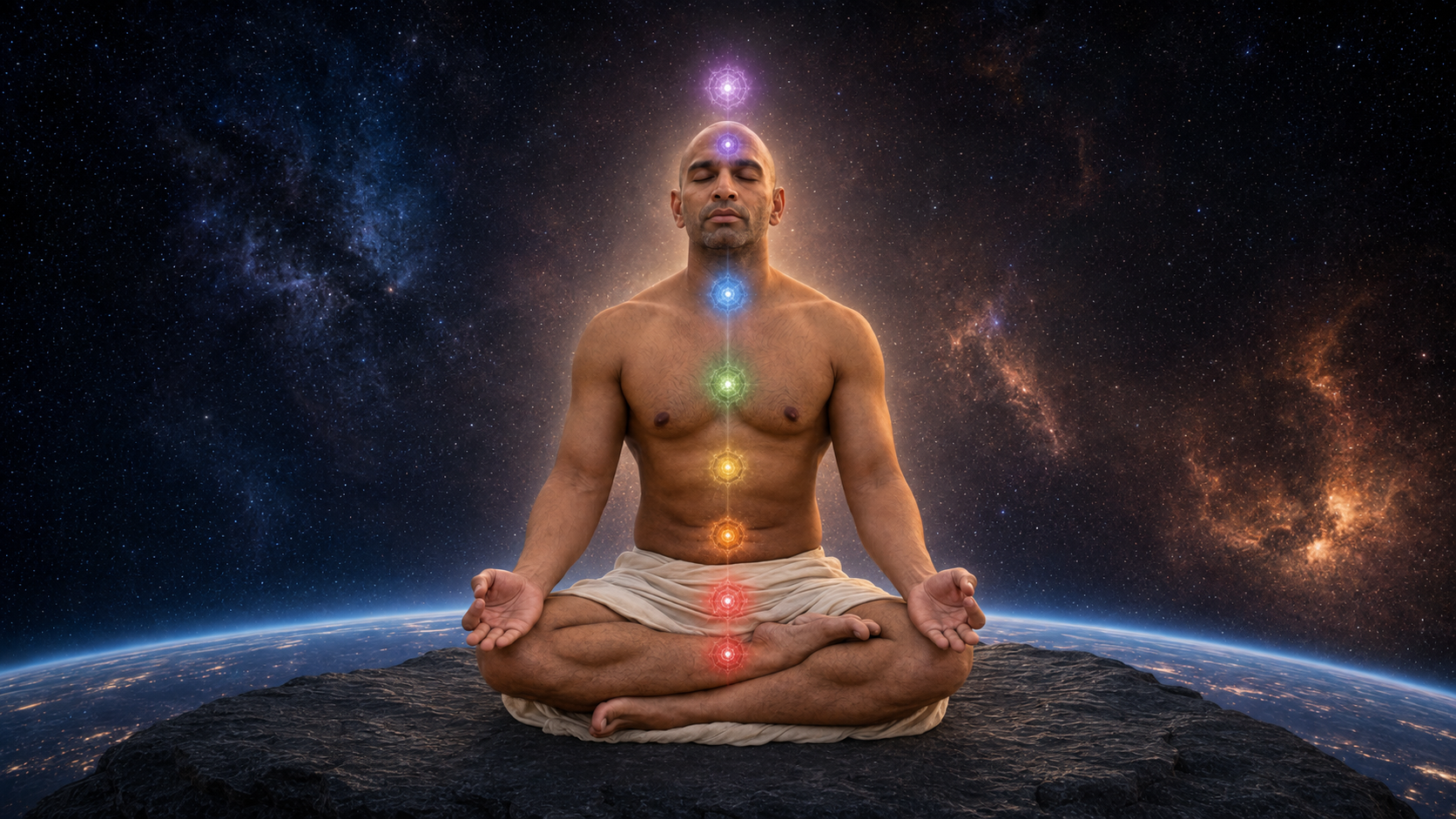
Meditator in lotus posture with the seven chakras illuminated along the spine

Sapta Cakra · The Seven Wheels

The Seven Chakras

Seven wheels of living energy strung along the spine, traditionally understood to shape how life flows through you — offered here for personal reflection, not diagnosis.

What is a chakra?

Wheels of consciousness in the subtle body

The word cakra means wheel or disc. The tradition maps seven along the central channel (suṣumnā nāḍī), from the base of the spine to the crown of the head. Each is a step on the ladder of consciousness — from survival at the root to unity at the crown.

These correspondences are traditional and symbolic, offered for personal reflection — individual experiences vary. If any list feels familiar, the practices beside it are where to begin. This page is not medical or psychological advice; please consult a qualified professional for health concerns.

(लं)

मूलाधार

Root

Earth · LAM

Base of spine

Chakra 1 · Significance

Foundation of the entire energy system. Governs survival, safety, belonging, and your material relationship with the earth.

Signs of imbalance

  • ·Chronic anxiety about money or safety
  • ·Feeling ungrounded, spacey, disconnected from body
  • ·Physical tension in the lower back or legs
  • ·Fear of change, hoarding, or feeling homeless in the world

How to balance

  • ·Walk barefoot on earth for 10 minutes daily
  • ·Chant LAM 108 times each morning
  • ·Eat root vegetables — beets, carrots, sweet potato
  • ·Establish a simple, non-negotiable daily routine
  • ·Wear or surround yourself with red
(वं)

स्वाधिष्ठान

Sacral

Water · VAM

Lower abdomen, two inches below navel

Chakra 2 · Significance

Seat of creativity, sensuality, pleasure, and emotional flow. Governs how freely you feel and express desire.

Signs of imbalance

  • ·Emotional numbness or dramatic mood swings
  • ·Creative blocks and lack of joy
  • ·Tightness or discomfort in the hips or lower abdomen
  • ·Guilt around pleasure, intimacy, or self-expression

How to balance

  • ·Chant VAM 108 times with hands over lower belly
  • ·Dance freely for one song each day, no audience
  • ·Practice hip-opening yoga — pigeon, baddha konasana
  • ·Drink pure water mindfully; sit near flowing water
  • ·Give one creative act permission daily — cook, paint, sing
(रं)

मणिपूर

Solar Plexus

Fire · RAM

Upper abdomen, at the navel

Chakra 3 · Significance

The seat of willpower, self-worth, and personal agency. Your inner fire — the courage to act on what you know is right.

Signs of imbalance

  • ·Chronic self-doubt or people-pleasing
  • ·Digestive discomfort or low energy
  • ·Anger, control issues, or crippling indecision
  • ·Feeling powerless in your own life

How to balance

  • ·Chant RAM 108 times; feel warmth at the navel
  • ·30 rounds of Kapalabhati breath morning and evening
  • ·Add warming spices — ginger, turmeric, black pepper
  • ·Sit in the sun 10 minutes without a screen
  • ·Take one bold action daily aligned with your dharma
(यं)

अनाहत

Heart

Air · YAM

Center of the chest

Chakra 4 · Significance

The bridge between lower and upper chakras. Governs love, compassion, forgiveness, and the felt sense of oneness with others.

Signs of imbalance

  • ·Difficulty giving or receiving love
  • ·Holding grudges; unprocessed grief
  • ·Tightness in the chest or shallow breathing
  • ·Loneliness even in company; fear of vulnerability

How to balance

  • ·Chant YAM 108 times, right hand on heart
  • ·Metta (loving-kindness) meditation, 10 minutes daily
  • ·One act of anonymous seva — a small gift, no credit
  • ·Daily gratitude journaling — three specific things
  • ·Deep chest-opening: cobra, camel, supported fish
(हं)

विशुद्ध

Throat

Ether · HAM

Throat, at the collarbone hollow

Chakra 5 · Significance

The gate of authentic expression. Governs voice, truth-telling, and the courage to say what needs to be said.

Signs of imbalance

  • ·Tension in the throat or jaw
  • ·Fear of speaking up; over-talking to fill silence
  • ·Gossip, lying, or withheld truths creating stagnation
  • ·Neck and jaw tension, teeth grinding

How to balance

  • ·Chant HAM 108 times; feel the vibration in the throat
  • ·Sing along to bhajans or mantra daily — full voice
  • ·Warm water with honey, ginger, and lemon each morning
  • ·One day of noble silence (mouna) per week
  • ·Speak one difficult truth this week — with love, without cruelty
(ॐ)

आज्ञा

Third Eye

Light · OM

Between the eyebrows

Chakra 6 · Significance

Seat of intuition, insight, and inner vision. Governs discernment beyond the intellect — the ability to see what is actually true.

Signs of imbalance

  • ·Overthinking; unable to trust intuition
  • ·Mental fog, eye strain, or trouble focusing
  • ·Disturbing dreams or complete dream amnesia
  • ·Living in fantasy or dismissing the unseen entirely

How to balance

  • ·Chant OM, feeling the sound at the brow point
  • ·Trataka (steady candle gaze) 5 minutes at dusk
  • ·Journal dreams within one minute of waking
  • ·Reduce screen time after sunset; darken the bedroom
  • ·Meditate on 'Who am I?' — never answering with thought
/

सहस्रार

Crown

Consciousness · Silence

Crown of the head

Chakra 7 · Significance

The thousand-petaled lotus. Governs connection to the transcendent, the Self beyond self, and the direct experience of unity.

Signs of imbalance

  • ·Cynicism, spiritual apathy, sense of meaninglessness
  • ·Rigid beliefs; inability to receive grace
  • ·Restlessness or trouble sleeping
  • ·Feeling cut off from anything larger than yourself

How to balance

  • ·Sit in silence 20 minutes daily — no technique, just presence
  • ·Chant 'Asato Mā Sadgamaya' before sleep
  • ·Study one verse of the Upanishads or Gītā daily
  • ·Surrender the fruits of one action each day
  • ·Spend one hour weekly in a place of worship or wild nature

ॐ

Which chakra needs you most?

Answer seven simple questions. Receive a reflection on which chakra may be asking for attention, traditional practices, and matching mantras — in under three minutes.